
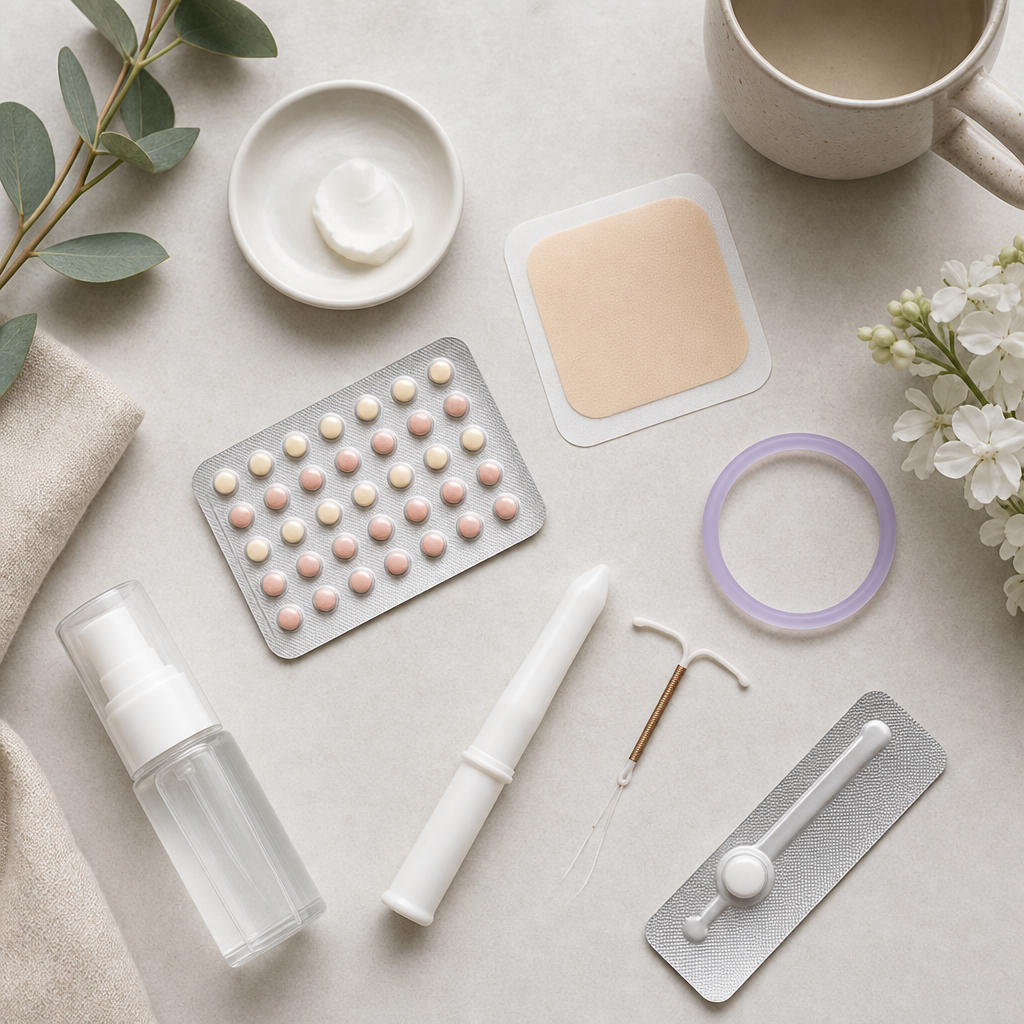
HRT for Perimenopause
A Complete, Evidence‑Based Guide to Your Options and How to Talk to Your Doctor
| ⚠️ Important Health Disclaimer The information in this article is for educational purposes only and does not constitute medical advice. Hormone therapy carries real risks and benefits that vary significantly by individual. Always consult a qualified, menopause-informed healthcare provider before starting, stopping, or changing any hormone therapy. If you are experiencing severe symptoms, unusual bleeding, chest pain, or other concerning health changes, please seek immediate medical attention. |
Picture this: You’re sitting in your doctor’s office, finally working up the courage to describe what your body has been doing for the past 18 months. The irregular periods. The 3 a.m. wake-ups drenched in sweat. The heart palpitations that make you clutch your chest during grocery runs. The brain fog so thick you forgot your best friend’s birthday for the first time in fifteen years. You list it all out, and your doctor smiles gently and says, “That’s just normal aging.”
You drive home feeling dismissed, invisible — and honestly, a little unhinged. Because this doesn’t feel normal. This feels like your body has been handed over to a stranger who doesn’t follow your usual rules.
So you do what any self-respecting woman does at midnight: you open seventeen browser tabs. And within twenty minutes you’ve read that HRT causes breast cancer, and that HRT prevents breast cancer, and that bioidentical hormones are totally natural and safe, and that compounded hormones are completely unregulated and dangerous. You close your laptop, absolutely no better off.
Here’s the thing: you deserve actual information. Not a fear headline from 2002. Not a wellness influencer selling you a supplement stack. Real, research-grounded, nuanced information — delivered like a knowledgeable friend who has also spent way too many hours reading studies and wants to save you the trouble.
That’s exactly what this article is. We’re going to walk through what hormone replacement therapy (HRT) for perimenopause actually is, what the research really says, what your options look like, and how to walk into your next doctor’s appointment ready to have a real conversation.
So, What Exactly Is HRT for Perimenopause?
In plain language: hormone replacement therapy (HRT) — also called menopausal hormone therapy (MHT) — is the use of estrogen, progesterone, or both to supplement the hormones your ovaries are producing less reliably during perimenopause. Think of it as a steady hand for a system that’s gotten shaky.
This article focuses specifically on perimenopausal use — that transition window that can start years before your final period and is often when symptoms are at their most chaotic, because hormone fluctuations (not just decline) are the culprit.
You’ll encounter two broad categories:
- Systemic HRT — hormones delivered into the bloodstream to treat whole-body symptoms like hot flashes, sleep disruption, mood changes, and bone loss.
- Local/vaginal therapy — low-dose estrogen applied directly to vaginal tissue to address dryness, discomfort, and urinary symptoms, with minimal systemic absorption.
You’ll also hear the terms “bioidentical” and “compounded” a lot. Quick distinction: FDA-approved bioidentical hormones (like Estrace or Prometrium) are lab-made to match your body’s own hormones exactly and have gone through rigorous testing. Compounded hormones are custom-mixed by a pharmacy — not FDA-approved for safety or efficacy, though they are sometimes appropriate for specific needs under careful medical supervision.
How We Evaluated Hormone Therapy Options
Before we get into the options themselves, here’s our lens. We evaluated HRT types based on:
- Available research — including the landmark Women’s Health Initiative (WHI) trial and its significantly updated 2024 reinterpretations
- Delivery method and how that affects absorption, metabolism, and risk profile
- Hormone types available within each category
- FDA approval status
- General candidacy considerations — who tends to be a good fit and who may not be
| 📝 A Note on the WHI Study The 2002 Women’s Health Initiative study caused a seismic shift in HRT prescribing — and a lot of unnecessary fear. Researchers now understand that many of the risks identified applied primarily to older women (average age 63) using older formulations of oral combined hormones. A landmark 2024 Harvard-led reanalysis published in JAMA found that for healthy women under 60 or within 10 years of menopause, the benefits often outweigh the risks — particularly with newer delivery methods and formulations. |
We want to be crystal clear: this is not a treatment recommendation. Every section below is a starting point for a conversation with your provider, not a prescription.
Types of HRT and How They’re Delivered
Here’s your cheat sheet. We’ll break down each type and delivery method so you know what questions to ask.
Estrogen-Only Therapy
What it is: Estrogen administered without a progestogen component.
How it works: Replaces declining estradiol levels to address vasomotor symptoms (hot flashes, night sweats), mood instability, sleep disruption, bone protection, and vaginal health.
Who it may suit: Women who have had a hysterectomy (surgical removal of the uterus) and therefore do not need uterine lining protection. Not recommended for women with an intact uterus without the addition of a progestogen, as unopposed estrogen raises the risk of endometrial hyperplasia and cancer.
Pros: Simpler regimen; avoids the breast cancer risk associated with the progestogen component in combined therapy.
Cons: Not appropriate for most perimenopausal women (who typically have an intact uterus).
Combined Estrogen + Progestogen Therapy
What it is: Estrogen paired with a progestogen (either natural progesterone or a synthetic progestin) to protect the uterine lining.
Why the progestogen? Estrogen stimulates the growth of the uterine lining. Without a progestogen to balance it, that growth can become abnormal. If you have a uterus, you need a progestogen alongside estrogen — full stop.
Two patterns of use:
- Sequential (cyclic): Progestogen added for 12–14 days per month; usually causes a predictable withdrawal bleed. Often preferred in early perimenopause when cycles are still happening.
- Continuous combined: Both hormones taken daily; bleeding typically stops over time. Often preferred after menopause is confirmed.
Who it may suit: Women with an intact uterus who need systemic symptom relief.
Micronized Progesterone vs. Synthetic Progestins — This Distinction Matters
Not all progestogens are created equal, and this is one of the most important nuances in the HRT conversation:
- Micronized progesterone (brand name: Prometrium) is body-identical — it matches the molecular structure of the progesterone your ovaries produce. Current research suggests it has a more favorable safety profile, particularly regarding breast cancer risk and cardiovascular health. It can also have a mild calming effect that many women find helpful for sleep.
- Synthetic progestins (like medroxyprogesterone acetate, norethisterone, levonorgestrel) are structurally different. The original WHI study used medroxyprogesterone acetate — and this combination showed a modest increased breast cancer risk that has since been linked more specifically to the progestincomponent than to estrogen itself.
| 💡 Good to Know A 2024 Harvard-led analysis noted that micronized progesterone does not appear to increase breast cancer risk in the way that older synthetic progestins did. This is a key piece of information to bring to your provider conversation. |
Bioidentical vs. Compounded Hormones: What You Need to Know
FDA-Approved Bioidentical Hormones
Hormones that are chemically identical to those your body makes, but manufactured in regulated pharmaceutical settings and approved by the FDA for safety, purity, and efficacy. Examples include Estrace (oral estradiol), Vivelle-Dot and Climara (estradiol patches), Divigel (estradiol gel), and Prometrium (micronized progesterone).
Compounded Bioidentical Hormones
Custom-mixed by a compounding pharmacy, often in non-standard doses or combinations. Not FDA-approved for safety or efficacy. May be appropriate in select cases (e.g., allergy to an ingredient in an FDA-approved product) but require careful medical oversight. Claims that compounded hormones are automatically “safer” or “more natural” are not supported by current evidence.
Delivery Methods: How HRT Gets Into Your Body
Oral Pills (Tablets)
Swallowed daily. Convenient and familiar. Oral estrogen undergoes first-pass metabolism through the liver, which means higher doses are needed and the liver produces certain proteins — including clotting factors — at elevated levels. This is why oral HRT carries a slightly higher risk of blood clots (venous thromboembolism) compared to transdermal routes. May suit women who prefer a simple daily pill and have no clotting risk factors.
Transdermal Patches
Worn on the skin (lower abdomen or buttocks), changed once or twice weekly depending on the formulation. Bypass the liver entirely — estradiol absorbs directly into the bloodstream. Research consistently shows transdermal estradiol does not increase VTE (blood clot) risk at standard therapeutic doses. Often the preferred option for women with cardiovascular risk factors, migraines, elevated blood pressure, or personal/family history of clots. Predictable, steady hormone levels.
Gels, Sprays, and Creams (Systemic Transdermal)
Applied to the skin daily (inner arm, thigh). Like patches, they bypass first-pass liver metabolism. Gels and sprays offer dose flexibility — you can adjust by pump. Suits women who want fine-tuned dosing or who experience skin irritation from patches. Takes consistent daily application.
Vaginal Rings, Tablets, and Creams (Local Estrogen)
These are local therapy — designed to treat vaginal dryness, pain during sex (dyspareunia), and urinary symptoms (the group of symptoms called genitourinary syndrome of menopause, or GSM) with minimal systemic absorption. Examples include Vagifem tablets, Estring ring, and Premarin cream. Many providers consider local vaginal estrogen so low-risk that even women who cannot use systemic HRT may be candidates. Does not treat hot flashes or systemic symptoms.
Hormone Pellets
Small pellets implanted under the skin (typically the hip area) that slowly release hormones over 3–6 months. Note: pellets are controversial in the medical community. They are not FDA-approved as a delivery system, dosing is difficult to adjust once implanted, and hormone levels can fluctuate significantly. Some women report excellent results; others experience supraphysiologic (above-normal) hormone levels. Proceed with careful, informed conversation with a knowledgeable provider.
What the Research Suggests About HRT
Let’s be clear: HRT does not “cure” perimenopause. But a substantial body of research — including updated analyses of the Women’s Health Initiative and newer studies — suggests it may meaningfully support quality of life in several areas. Benefits are generally sustained while you’re using HRT; stopping often brings symptoms back.
- Vasomotor symptoms (hot flashes & night sweats): Estrogen therapy is the most effective treatment currently available for hot flashes and night sweats. Many women find significant relief, often within a few weeks of starting.
- Sleep: Research suggests HRT may improve sleep quality, in part by reducing night sweats and in part through direct effects on sleep architecture.
- Mood and emotional wellbeing: Estrogen has well-documented effects on serotonin and other mood-related neurotransmitters. Many women find HRT supports mood stability and reduces anxiety during perimenopause — though it is not a treatment for clinical depression or anxiety disorders.
- Brain fog and cognitive function: Estrogen plays a role in brain health. Some research suggests HRT may support verbal memory and reduce brain fog, particularly when started during the perimenopausal window.
- Bone density: Estrogen is bone-protective. HRT may help slow the accelerated bone loss that occurs during perimenopause and menopause, potentially reducing fracture risk.
- Cardiovascular health (the timing hypothesis): This is nuanced and important. Research — including a 2025 study presented at The Menopause Society’s annual meeting — suggests that starting estrogen therapy during perimenopause (rather than years after menopause) may offer cardiovascular protective effects. Women who initiated estrogen a decade before menopause showed significantly lower odds of heart attack and stroke compared to those who started later. This is called the “timing hypothesis” or “window of opportunity.”
- Vaginal and sexual health: Both systemic and local estrogen may improve vaginal dryness, tissue elasticity, and sexual comfort.
| 📋 Research Note A 2024 Harvard-led JAMA analysis based on 20+ years of WHI follow-up data found that for women under 60 or within 10 years of menopause, hormone therapy effectively treats bothersome menopause symptoms while posing comparatively few health risks — especially with transdermal delivery and micronized progesterone. |
Risks and Safety Considerations to Discuss With Your Doctor
Here’s where we have to be honest and thorough — because good decisions require complete information, not just the reassuring parts. Think of this as your pre-appointment reading, not a reason to panic.
If you are ready to talk with your provider, take a look at our Tips for Talking with Your Doctor, and Sign Up for our free Perimenopause Symptom Tracker to aid in the initial conversation.
Breast Cancer Risk
This is the big one, and it deserves nuance. The relationship between HRT and breast cancer depends heavily on which hormones, which formulation, and for how long:
- Estrogen-only HRT (in women post-hysterectomy) has not been shown to significantly increase breast cancer risk and in some analyses appears to slightly reduce it.
- Combined estrogen + synthetic progestin therapy has been associated with a modest increased risk — in the range of about 8 additional cases per 10,000 women per year in some analyses. For context, this is comparable to the risk associated with having one alcoholic drink daily or being overweight.
- Combined estrogen + micronized progesterone appears to carry a lower breast cancer risk than synthetic progestin combinations, based on current evidence.
- Risk appears to diminish after stopping HRT.
The key takeaway: breast cancer risk is not a simple yes-or-no based on HRT use. It is a nuanced, individualized calculation your provider can help you work through.
Blood Clots and Stroke
- Oral estrogen is associated with a modestly increased risk of venous thromboembolism (blood clots) and stroke, due to its effect on liver-produced clotting factors.
- Transdermal estrogen (patches, gels, sprays) does not appear to carry this elevated clot risk at standard doses, making it the preferred delivery method for women with risk factors.
Who Should Avoid or Delay HRT
Your provider will assess your individual history. HRT may not be appropriate for women with:
- A personal history of certain hormone-sensitive cancers (e.g., estrogen-receptor positive breast cancer)
- Active or recent blood clots or a significant clotting disorder
- Unexplained vaginal bleeding
- Active liver disease
- A recent history of heart attack or stroke (though this requires individualized assessment)
This is not an exhaustive list — it’s a conversation starter. A menopause-informed provider will do a thorough risk-benefit assessment with your specific history in mind.
HRT at a Glance: Pros, Considerations & Fit
| HRT Type / Delivery | Potential Benefits | Possible Risks / Considerations | May Suit |
| Estrogen-Only (any route) | Hot flash relief, bone protection, mood, sleep, cardiovascular (timing), vaginal health | Only appropriate without progestogen if uterus is absent | Women post-hysterectomy |
| Combined Estrogen + Micronized Progesterone | Full symptom relief with more favorable progestogen profile; may support sleep | Modest breast cancer risk (lower than with synthetic progestins); cost may be higher | Women with intact uterus seeking lowest-risk combined option |
| Combined Estrogen + Synthetic Progestin | Full symptom relief; widely available; various delivery combos | Modestly elevated breast cancer risk with long-term use; varies by progestin type | Women with intact uterus; widely used starting point |
| Oral Pills | Convenient; well-studied; easy daily routine | First-pass liver metabolism; modestly higher VTE/clot risk vs. transdermal | Women without cardiovascular or clotting risk factors |
| Transdermal Patches | Bypasses liver; stable hormone levels; lower clot risk; twice-weekly dosing | Skin irritation in some; adhesion issues in heat/humidity | Women with cardiovascular risk factors, migraines, clotting history |
| Gels / Sprays | Bypasses liver; flexible dosing; no adhesive | Daily application required; transfer risk to others if not dried fully | Women wanting dose flexibility without adhesive patches |
| Local Vaginal Estrogen | Effective for GSM (dryness, urinary symptoms); minimal systemic absorption | Does not relieve hot flashes or systemic symptoms | Women with vaginal/urinary symptoms only, or those who can’t use systemic HRT |
| FDA-Approved Bioidenticals | Regulated safety & purity; body-identical hormones; good evidence base | May have fewer customization options than compounded | Most perimenopausal women starting HRT |
| Compounded Hormones | Customizable dosing/formulation; may suit specific needs | Not FDA-approved for safety/efficacy; quality varies by pharmacy; limited evidence base | Specific cases under careful medical supervision only |
| Hormone Pellets | Long-acting; no daily dosing | Not FDA-approved; irreversible dosing once implanted; risk of supraphysiologic levels; controversial | Discuss carefully; not a first-line option |
Who HRT May (and May Not) Be Right For
The research suggests HRT may be a strong fit for women who:
- Are in perimenopause or recently postmenopausal (within 10 years of last period)
- Are under age 60
- Experience moderate-to-severe vasomotor symptoms affecting quality of life
- Have no significant personal history of hormone-sensitive cancers, clotting disorders, or active liver disease
- Have concerns about bone density
HRT may not be appropriate — or requires very careful, individualized discussion — for women who:
- Have a personal history of estrogen-receptor positive breast cancer (though even this is actively being studied and debated)
- Have a history of blood clots, pulmonary embolism, or significant clotting disorders
- Have unexplained vaginal bleeding
- Have active liver disease
- Are significantly older or many years past menopause (higher cardiovascular risk with initiation)
If HRT isn’t the right fit for you, there are other paths. Research-backed non-hormonal options — from SSNRIs to cognitive behavioral therapy to newer medications like fezolinetant — are worth exploring with your provider.
| 🔗 Also see: Best Supplements for Perimenopause — what the research actually says about magnesium, adaptogens, and more. |
How to Find a Menopause-Informed Provider
Here’s an uncomfortable truth: not all doctors are up to date on perimenopause and HRT. Many received very little menopause training in medical school, and some are still practicing based on the 2002 WHI panic rather than the updated 2024 evidence. It is absolutely okay — and necessary — to advocate for yourself.
Here’s where to start:
- The Menopause Society (formerly NAMS) maintains a directory of Menopause Society Certified Practitioners (MSCP) at menopause.org. These providers have passed a comprehensive exam on menopause medicine — a great baseline of assurance.
- Telehealth options have expanded dramatically and can be a lifeline if you’re in an area without local specialists. Several platforms now specialize specifically in women’s midlife health. Ask for providers with MSCP certification or demonstrable menopause expertise.
- Come prepared. Bring a symptom journal, your family history, and your questions written down. If you feel dismissed, it is completely appropriate to seek a second opinion — or a third.
- Ask directly: “Are you up to date on the updated Women’s Health Initiative interpretations?” and “Do you have experience prescribing transdermal HRT and micronized progesterone?” are both fair, reasonable questions.
| 💕 You’ve Got This Perimenopause is not a disease. It’s a transition — a significant, sometimes brutal one, but a transition nonetheless. You are not imagining your symptoms. You are not being dramatic. And you have more options than you may realize. The best thing you can do right now is get informed (check — you’re doing it), find a provider who takes you seriously, and walk in knowing that your quality of life matters and is worth fighting for. |
Sources & Further Reading
- Manson, J.E., et al. (2024). Menopausal Hormone Therapy and Long-term Health Effects. JAMA. Harvard-led 20-year WHI follow-up analysis. https://jamanetwork.com/journals/jama
- The Menopause Society (formerly NAMS). (2022). The 2022 Hormone Therapy Position Statement of The Menopause Society. https://menopause.org
- NIH / National Institute on Aging. Menopause: Hormones and You. https://nia.nih.gov
- Mayo Clinic Staff. (2023). Hormone therapy: Is it right for you? https://mayoclinic.org
- ACOG (American College of Obstetricians and Gynecologists). (2022). Practice Bulletin: Management of Menopausal Symptoms. https://acog.org
- Salamon, M. (2024). Hormone therapy benefits outweigh risks for younger women. Harvard Women’s Health Watch. https://health.harvard.edu