
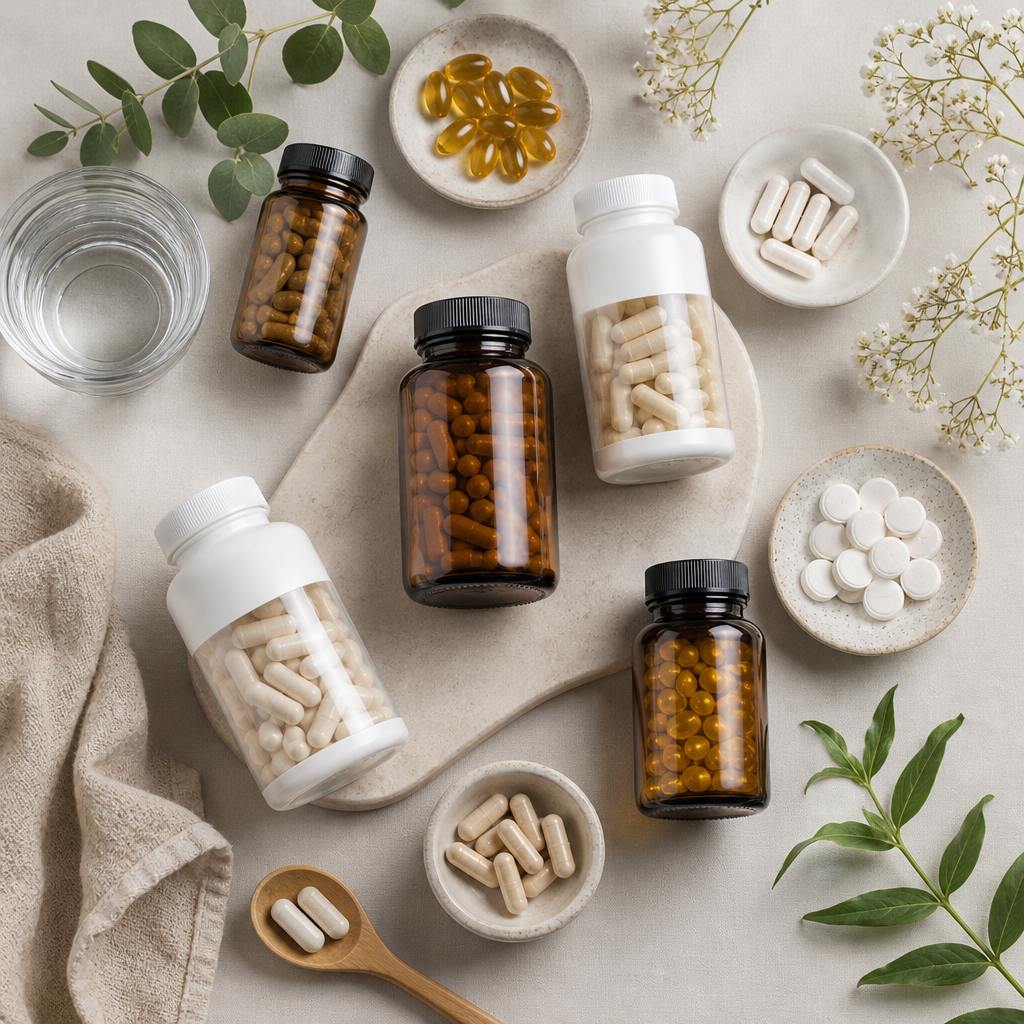
Best Supplements for Perimenopause
Evidence‑Informed Options for Sleep, Mood, Hormones & Hot Flashes
| ⚠️ Supplement & Health Disclaimer The information in this article is for educational purposes only and does not constitute medical advice. Supplements are not intended to diagnose, treat, cure, or prevent any disease. Always consult a qualified healthcare provider before starting any supplement regimen, especially if you are pregnant, nursing, taking medications, or have a medical condition. Individual results vary. |
| 🚨 High-Risk Health Notice If you are experiencing severe symptoms, unusual bleeding, chest pain, or other concerning health changes, please seek immediate medical attention. Do not delay medical care based on information found in this article. |
It’s 3 a.m. Again, Isn’t It? You wake up drenched — sheets, pillow, the works. Your heart’s racing, your mind immediately fires up a to-do list that could rival a small country’s GDP, and your mood? Let’s just say you cried at a paper towel commercial last week. Welcome to perimenopause, friend. You are not alone, and you are absolutely not losing your mind.
Here’s the thing: when you finally decide to do something about all of this, walking into a supplement aisle (or falling down an internet rabbit hole at midnight) can feel like being handed a 1,200-piece puzzle with no picture on the box. Magnesium? Which kind? DIM? What even is that? Black cohosh sounds like a Harry Potter ingredient. It’s a lot.
That’s exactly why this guide exists. We’re not here to sell you a miracle. We’re here to walk you through the most talked-about, most researched perimenopause supplements — what the science actually says, what typical dosage ranges look like in the literature, and what questions you should be bringing to your doctor or midwife. Think of this as your cheat sheet for a more empowered, informed conversation with your healthcare provider — not a replacement for one.
Because you deserve real information, delivered like it’s coming from a knowledgeable best friend who also happens to be a very enthusiastic reader of PubMed abstracts at 11 p.m.
What Perimenopause Is and Why Supplements Matter
Perimenopause is the transitional phase your body enters before reaching menopause — which is officially defined as 12 consecutive months without a period. During perimenopause, your estrogen and progesterone levels fluctuate (sometimes wildly), which is what triggers so many of the symptoms that can feel completely out of nowhere.
It can begin as early as your late 30s — yes, really — and typically runs through your mid-to-late 40s, though it can last anywhere from a few years to over a decade. Symptoms can include hot flashes, night sweats, irregular periods, mood shifts, brain fog, sleep disruption, joint aches, and changes in libido, among others. In short: your body is going through a hormonal renovation, and it’s not always tidy.
How We Evaluated the Best Perimenopause Supplements
The phrase “best supplements for perimenopause” gets thrown around a lot, so let’s be clear about how we define it here. We evaluated each supplement based on the following criteria:
- Strength of scientific research — Are there peer-reviewed studies, clinical trials, or meta-analyses? How consistent are the findings?
- Safety profile — What do the available data say about side effects, interactions, and contraindications?
- Clinical recognition — Is this supplement discussed or recommended by healthcare providers, major health organizations, or bodies like The Menopause Society or NCCIH?
- Quality standards — Are reputable third-party testing options available for this category of supplement?
- Accessibility and price — Can the average person realistically access and afford it?
An important note: “best” here means most studied and most widely discussed — not “guaranteed to work” or a cure for anything. Every body is different. What helps one woman significantly may do little for another. Use this as a starting point, not a prescription.
The Supplements Most Discussed for Perimenopause
Magnesium Glycinate — For Sleep, Mood & Muscle Tension
| What it is: Magnesium is an essential mineral involved in over 300 enzymatic reactions in the body. The glycinate form (bound to the amino acid glycine) is widely considered one of the most bioavailable and gentlest-on-the-stomach versions. What the research suggests: Magnesium deficiency is common in women over 40, and some research suggests it may play a role in sleep quality, anxiety regulation, and muscle tension — all things that tend to go sideways during perimenopause. A 2023 review noted that magnesium supplementation may support sleep efficiency and reduce subjective anxiety, and there is emerging interest in its role in supporting bone mineral density alongside calcium and vitamin D. Typical dosage range in literature: 300–400 mg daily, often recommended in the evening to support sleep. Pros: Widely accessible, generally well-tolerated, relatively affordable, addresses multiple symptom domains at once. Cons: Higher doses may cause loose stools (stick to glycinate to minimize this). Quality varies between brands. May suit you if: Sleep disruption, nighttime anxiety, muscle cramps, or general tension are your biggest concerns. This is often the first supplement many integrative practitioners reach for. |
Vitamin D3 + K2 — For Bone Health, Mood & Immune Support
| What it is: Vitamin D3 (cholecalciferol) is the form your body produces from sunlight exposure. K2 (menaquinone, particularly the MK-7 form) works synergistically with D3 to direct calcium into bones rather than arteries. What the research suggests: Vitamin D deficiency is extremely common in perimenopausal women, and low levels have been associated with accelerated bone loss, worsened mood, and impaired immune function. The NIH Office of Dietary Supplements notes that adequate vitamin D is critical for calcium absorption and bone health — both of which become especially important as estrogen declines. Some research also links vitamin D levels to mood regulation pathways. The addition of K2 is widely discussed to support proper calcium utilization. Typical dosage range in literature: D3: 1,000–4,000 IU daily (ideally guided by blood testing). K2 MK-7: 100–200 mcg daily. Pros: Strong evidence for bone support; dual action with K2; widely available; inexpensive. Cons: Fat-soluble vitamin — should be taken with food. Blood testing recommended to avoid over-supplementing D3 long-term. May suit you if: You spend most of your time indoors, live in a northern climate, have concerns about bone density, or your doctor has flagged low vitamin D levels on labs. Vitamin D perimenopause research is among the most robust in this space. |
Omega-3 Fatty Acids — For Mood, Brain, Inflammation & Heart Health
| What it is: Omega-3s (EPA and DHA) are essential polyunsaturated fats found in fatty fish, algae, and quality fish oil supplements. EPA is particularly studied for mood, while DHA is closely linked to brain structure and function. What the research suggests: Several studies suggest that adequate EPA and DHA intake may support mood stability, help with mild depressive symptoms, and reduce systemic inflammation — all relevant concerns as estrogen (which has anti-inflammatory properties) begins to fluctuate. Some research also points to cardiovascular benefits, which matter more as women’s heart disease risk rises post-menopause. A diet rich in omega-3s is consistently highlighted by cardiologists and nutritionists alike. Typical dosage range in literature: 1,000–3,000 mg combined EPA+DHA daily. Algae-based versions are available for those who don’t consume fish. Pros: Broad benefits across mood, brain, and cardiovascular health; available in both fish oil and vegan algae forms; well-studied. Cons: Can cause “fishy burps” (enteric-coated capsules help). May interact with blood-thinning medications — flag with your doctor. May suit you if: Brain fog, mood dips, or joint stiffness are prominent for you, or if heart health is on your radar. Eating 2–3 servings of fatty fish weekly is a great food-first approach. |
B-Complex / B6 / Methylfolate — For Energy, Hormone Metabolism & Mood
| What it is: The B vitamin family — especially B6 (pyridoxine), B12 (methylcobalamin), and folate (ideally as methylfolate, the active form) — plays critical roles in neurotransmitter production, energy metabolism, and how the body processes hormones. What the research suggests: B6 in particular has been studied in relation to PMS and hormone-related mood changes, with some evidence suggesting it may support serotonin production. Methylfolate (the bioactive form of folic acid) is increasingly preferred, especially for women with MTHFR gene variants who may struggle to convert synthetic folic acid. B vitamins broadly support the cellular energy processes that tend to sputter when you’re running on disrupted sleep and hormonal chaos. Typical dosage range in literature: A quality B-complex covers most bases. B6: typically 25–50 mg; methylfolate: 400–800 mcg; B12 as methylcobalamin: 500–1,000 mcg. Pros: Supports energy, mood, and nervous system health all at once; methylfolate form bypasses common genetic conversion issues. Cons: High-dose B6 (above 100 mg daily) over extended periods has been linked to nerve issues — more is not better. Stick to recommended ranges. May suit you if: Fatigue, brain fog, mood instability, or a known MTHFR variant are part of your picture. |
Black Cohosh — The Most Studied Botanical for Hot Flashes
| What it is: Black cohosh (Actaea racemosa) is a North American plant with a long history of use for menopausal symptoms. It is one of the most well-studied botanical supplements in this space and is notably approved by Germany’s Commission E — a scientific advisory board similar to the FDA — for the treatment of menopausal symptoms. What the research suggests: A 2023 review of 22 studies found black cohosh extracts were potentially beneficial for overall menopause symptoms, with data showing some improvements in hot flashes. Results across individual studies are mixed — some trials show meaningful reductions in hot flash frequency and severity, while others show results comparable to placebo. It appears to work via serotonin and dopamine receptor modulation rather than as a direct estrogen mimic, which is an important distinction. The most studied commercial preparation is Remifemin (20 mg standardized extract, twice daily). ⚠️ Liver caution: Rare cases of liver injury have been reported in people taking products labeled as black cohosh. The NCCIH notes it’s uncertain whether black cohosh itself or contaminants in poorly regulated products are responsible. If you use black cohosh, choose products verified by third-party testing, and consult your provider if you notice symptoms like dark urine or unusual fatigue. It is not recommended for those with existing liver conditions. Typical dosage range in literature: 20–40 mg standardized extract (Remifemin formulation), twice daily. Allow 4–8 weeks to assess effect. Pros: Most researched botanical for hot flashes; Commission E recognized; non-estrogenic mechanism. Cons: Mixed study results; liver safety concerns require good-quality, verified products and professional oversight; not for everyone. May suit you if: Hot flashes and night sweats are your number one complaint and you want a botanical option before exploring other routes. Always discuss with your provider first. Also see: [INTERNAL LINK: Non-Hormonal Treatments for Perimenopause article] |
Ashwagandha / KSM-66 — For Cortisol, Stress & Sleep
| What it is: Ashwagandha (Withania somnifera) is an adaptogenic herb with a long history in Ayurvedic medicine. KSM-66 is a specific, well-researched root extract with multiple published randomized controlled trials behind it. What the research suggests: Multiple RCTs demonstrate that KSM-66 ashwagandha may significantly reduce cortisol levels, perceived stress, anxiety, and improve sleep quality. One study specifically in perimenopausal women found notable improvements across multiple symptom domains, including hot flash frequency and general wellbeing. This is particularly relevant because perimenopause often coincides with peak life stress — kids, aging parents, demanding careers — and elevated cortisol can worsen hormonal imbalance in a feedback loop. Typical dosage range in literature: 300–600 mg of KSM-66 or Sensoril extract daily. Allow a minimum 8-week trial for full effect. Pros: Well-researched extract form available; addresses the cortisol-hormone connection; may support both sleep and anxiety. Cons: Not recommended for those with thyroid conditions or on thyroid medications without medical guidance. May interact with immunosuppressants. May suit you if: Stress feels like the engine driving all your other symptoms, or if you’re waking at 3–4 a.m. with a racing mind and can’t trace it purely to hot flashes. |
Red Clover Isoflavones — For Hot Flashes & Bone Health
| What it is: Red clover (Trifolium pratense) is a plant-based source of isoflavones — phytoestrogens that weakly mimic estrogen in the body. It contains formononetin, biochanin A, daidzein, and genistein. What the research suggests: Some studies suggest red clover isoflavones may modestly reduce hot flash frequency and show some benefit for bone mineral density, particularly in the context of perimenopause-related bone loss. Results are inconsistent across studies, but some women report meaningful improvements. Evidence for bone support is considered more consistent than for hot flash relief. Typical dosage range in literature: 40–160 mg of isoflavones daily; most studied preparations fall in the 40–80 mg range. Pros: Plant-derived; may offer dual support for hot flashes and bone health; widely available. Cons: Phytoestrogens are not appropriate for everyone — particularly those with a history of hormone-sensitive cancers. Discuss with your provider before use. May suit you if: You’re looking for a gentle, plant-based starting point for hot flash support and your provider has given the green light given your personal history. Also see: |
DIM (Diindolylmethane) — For Estrogen Metabolism
| What it is: DIM is a compound derived from the digestion of indole-3-carbinol, which is found naturally in cruciferous vegetables like broccoli, cauliflower, Brussels sprouts, and cabbage. DIM supplements concentrate this compound significantly beyond what food provides. What the research suggests: DIM is thought to support healthier estrogen metabolism — specifically by promoting the conversion of estrogen toward less potent metabolites (2-hydroxyestrone) and away from more potentially problematic ones (16-hydroxyestrone). It’s a popular recommendation in integrative medicine circles, though clinical trials specifically in perimenopausal women are more limited than for some other supplements on this list. Some research suggests benefit in reducing estrogen dominance-related symptoms. Typical dosage range in literature: 100–200 mg daily, typically with food. Pros: Derived from food compounds; widely discussed in integrative women’s health; may support balanced estrogen metabolism. Cons: Limited large-scale clinical trial data specifically for perimenopause; can temporarily worsen symptoms in some women as estrogen metabolism shifts; not appropriate without guidance for those on hormone therapy. May suit you if: You experience symptoms often attributed to estrogen dominance — heavy periods, bloating, breast tenderness — and want to support metabolic pathways while working with your provider. |
Calcium — For Bone Density
| What it is: Calcium is the most abundant mineral in the body and is essential for bone structure, muscle function, and nerve transmission. As estrogen declines during perimenopause, bone loss can accelerate significantly. What the research suggests: The evidence for calcium’s role in bone health is well-established. The NIH recommends women ages 19–50 get 1,000 mg of calcium daily, rising to 1,200 mg after age 51. However, food-first is the approach most supported by current guidelines — dairy, fortified plant milks, leafy greens, canned salmon with bones, and almonds are excellent sources. Supplemental calcium (calcium citrate is generally better absorbed than calcium carbonate, especially without food) is recommended when dietary intake falls short — not in addition to an already calcium-rich diet, where cardiovascular risk signals have emerged in some research. Typical dosage range in literature: Supplement only what your diet doesn’t cover, typically 500–600 mg at a time (calcium is absorbed better in smaller doses). Always pair with vitamin D3 and K2. Pros: Essential for bone health; well-evidenced; calcium citrate is gentler on the stomach. Cons: Over-supplementing calcium without adequate K2 may be associated with arterial calcification concerns. Get your dietary calcium calculated before supplementing. Calcium carbonate requires stomach acid to absorb — take with meals. May suit you if: Your dietary calcium intake is consistently below recommendations, particularly if you’re dairy-free or don’t eat many calcium-rich foods. |
Probiotics — For the Gut-Hormone Axis
| What it is: Probiotics are live beneficial bacteria that support the gut microbiome. A subset of gut bacteria — sometimes called the “estrobolome” — plays a specific role in metabolizing and recirculating estrogen. What the research suggests: Emerging research suggests that a healthy gut microbiome may support healthier estrogen metabolism, reduce inflammation, support mood via the gut-brain axis, and even influence the severity of perimenopausal symptoms. This is a newer and rapidly evolving area of research — it’s not yet as established as, say, the vitamin D evidence — but the gut-hormone connection is a genuinely exciting frontier in women’s health science. Strains like Lactobacillus and Bifidobacterium species are most commonly studied. Typical dosage range in literature: 10–50 billion CFUs daily from a multi-strain formula; look for refrigerated options or shelf-stable products with guaranteed potency. Pros: Broad health benefits beyond hormones; supports digestion, immunity, and mood; well-tolerated by most. Cons: Research in perimenopause specifically is still developing; effects take time (think weeks to months); quality varies widely among brands. May suit you if: You’ve noticed GI changes, bloating, or mood shifts, or if you’re generally curious about supporting the gut-hormone connection as part of a bigger wellness approach. |
Quick Reference: Perimenopause Supplements at a Glance
| Supplement | Potential Benefit | Possible Consideration | Best For |
| Magnesium Glycinate | May support sleep quality, reduce anxiety and muscle tension, supports bone health | High doses may cause loose stools; quality varies by brand | Sleep disruption, anxiety, muscle cramps |
| Vitamin D3 + K2 | Supports bone density, may support mood and immune function; K2 directs calcium to bones | Fat-soluble; blood testing recommended; avoid over-supplementing | Bone health, mood support, low D3 on labs |
| Omega-3 Fatty Acids | May support mood, brain clarity, reduce inflammation, cardiovascular support | May interact with blood thinners; “fishy burps” with some brands | Mood, brain fog, joint stiffness, heart health |
| B-Complex / Methylfolate | Supports cellular energy, neurotransmitter production, hormone metabolism | High-dose B6 over time may cause nerve issues; choose methylfolate form | Fatigue, brain fog, mood instability, MTHFR variants |
| Black Cohosh | Most studied botanical for hot flashes; Commission E recognized | Rare liver injury reports; mixed study results; requires quality product | Hot flashes and night sweats (botanical option) |
| Ashwagandha (KSM-66) | May significantly reduce cortisol, stress, anxiety; supports sleep | Not for thyroid conditions or on thyroid medications without guidance | Stress-driven symptoms, 3 a.m. wake-ups, anxiety |
| Red Clover Isoflavones | May modestly reduce hot flash frequency; some bone density support | Not appropriate for those with hormone-sensitive cancer history | Hot flashes, bone support, plant-based preference |
| DIM | May support healthier estrogen metabolite balance | Limited large trials; may temporarily worsen symptoms; caution with HRT | Estrogen-dominance symptoms (bloating, heavy periods) |
| Calcium | Essential for bone density maintenance as estrogen declines | Food-first; don’t over-supplement; pair with D3 + K2; citrate form preferred | Bone health, low dietary calcium intake |
| Probiotics | May support gut-hormone axis, mood, digestion, immunity | Perimenopause-specific research still emerging; effects take time | GI changes, bloating, mood shifts, overall gut health |
Which Supplement Might Be Right for You?
Every woman’s perimenopause story is different, and your symptoms are your best guide. Here’s a shorthand to help you start the conversation with your provider:
- If sleep is your biggest struggle: Start with Magnesium Glycinate (evening dose) and consider adding Ashwagandha/KSM-66 if a racing mind is keeping you up.
- If hot flashes are front and center: Black Cohosh is the most studied botanical option. Red Clover Isoflavones are a secondary plant-based consideration.
- If mood swings and anxiety are winning: Omega-3s, Magnesium Glycinate, and B-Complex with methylfolate address several of the neurotransmitter and inflammatory pathways linked to mood changes.
- If bone health is your priority: The trio of Vitamin D3 + K2, Calcium (food-first), and Magnesium covers the core bases your bones need as estrogen shifts.
- If stress feels like the root of everything: Ashwagandha/KSM-66 is your starting point. Supporting the adrenal-cortisol connection may create downstream benefits across multiple symptoms.
- If you want to support estrogen metabolism: DIM and Probiotics address two different angles of how your body processes estrogen — one biochemical, one via the gut.
- If you want a gentle daily foundation: Many integrative practitioners recommend starting with Magnesium Glycinate, Vitamin D3 + K2, and Omega-3s as a core trio, then layering from there based on your symptoms.
How to Choose High‑Quality Supplements Safely
The supplement industry is largely unregulated — which means what’s on the label isn’t always what’s in the bottle. Here’s how to shop smarter:
- Look for third-party certifications. Seals from NSF International, USP (U.S. Pharmacopeia), Informed Sport, or ConsumerLab mean an independent organization has verified the product’s contents and purity. This matters especially for black cohosh, where contamination with other herbs has been documented.
- Bioavailability matters more than you think. The form of a supplement changes how well your body uses it. Magnesium glycinate over magnesium oxide. Methylfolate over folic acid. Calcium citrate over calcium carbonate. Vitamin D3 over D2. These aren’t marketing gimmicks — they’re biochemistry.
- Start low and go slow. Introduce one new supplement at a time, at the lower end of the dosage range, and wait 4–6 weeks before evaluating. This helps you identify what’s actually helping (and what might not be agreeing with you).
- Keep your doctor informed. Even “natural” supplements can interact with prescription medications. This is especially true for blood thinners, thyroid medications, antidepressants, and immunosuppressants. Your pharmacist is also an excellent (and underutilized) resource.
- Avoid megadosing. More is rarely better in the supplement world, and sometimes it’s actively counterproductive or harmful. Work within evidence-based dosage ranges.
- Don’t replace meals or medical care with supplements. A magnesium pill will never out-supplement a diet of ultra-processed food and chronic sleep deprivation. These are tools — not magic. Pair with the basics: sleep, movement, whole foods, stress management.
Supplements vs. Hormone Therapy: How to Decide
| 💡 A Note on Perimenopause Supplements vs. Hormone Therapy Supplements can be a meaningful part of your perimenopause support strategy, but they’re not the only option — and for some women, they may not be enough. Hormone Replacement Therapy (HRT) has a robust evidence base and is now recommended as safe for many women without contraindications. Read our full guide on HRT for Perimenopause to compare your options with your provider. If you are ready to talk with your provider, take a look at our Tips for Talking with Your Doctor, and Sign Up for our free Perimenopause Symptom Tracker to aid in the initial conversation. |
The Bottom Line
Perimenopause can feel like your body has suddenly started making decisions without consulting you. But knowledge is power, and you’re already doing the work by being here, asking questions, and seeking evidence-informed guidance rather than just grabbing whatever has the prettiest label on the shelf.
The best supplements for perimenopause are the ones that are appropriate for your body, your symptoms, and your health history — ideally chosen in partnership with a healthcare provider who takes your experience seriously. Use this guide to walk into that appointment more prepared, more confident, and ready to advocate for yourself.
You’ve got this. And you’ve definitely got company.
References & Further Reading
- National Institutes of Health, Office of Dietary Supplements. Magnesium: Fact Sheet for Health Professionals. Updated June 2022. https://ods.od.nih.gov/factsheets/Magnesium-HealthProfessional/
- National Institutes of Health, Office of Dietary Supplements. Vitamin D: Fact Sheet for Health Professionals. Updated August 2023. https://ods.od.nih.gov/factsheets/VitaminD-HealthProfessional/
- National Center for Complementary and Integrative Health (NCCIH). Black Cohosh: Usefulness and Safety. Updated 2023. https://www.nccih.nih.gov/health/black-cohosh
- National Institutes of Health, Office of Dietary Supplements. Black Cohosh: Fact Sheet for Health Professionals. https://ods.od.nih.gov/factsheets/BlackCohosh-HealthProfessional/
- The Menopause Society (formerly NAMS). Nonhormonal Management of Menopause-Associated Vasomotor Symptoms: 2023 Position Statement. https://www.menopause.org/clinical-care/menopause-faqs/faqs-about-nonhormonal-treatments
- Aedo S, et al. Omega-3 fatty acids supplementation for the treatment of menopausal symptoms. Climacteric. 2023. Available via PubMed: https://pubmed.ncbi.nlm.nih.gov/
- National Institutes of Health, Office of Dietary Supplements. Calcium: Fact Sheet for Health Professionals.Updated September 2023. https://ods.od.nih.gov/factsheets/Calcium-HealthProfessional/
- Mayo Clinic Staff. Perimenopause: Symptoms & Causes. Mayo Clinic. https://www.mayoclinic.org/diseases-conditions/perimenopause/symptoms-causes/syc-20354666
- Salve J, et al. Adaptogenic and Anxiolytic Effects of Ashwagandha Root Extract in Healthy Adults: A Double-blind, Randomized, Placebo-controlled Clinical Study. Cureus. 2019. PMID: 31882971. https://pubmed.ncbi.nlm.nih.gov/31882971/
- Shakeri A, et al. Red clover (Trifolium pratense) and its isoflavones — efficacy and safety during perimenopause and menopause. Maturitas. 2015. Available via PubMed: https://pubmed.ncbi.nlm.nih.gov/
This article was reviewed for accuracy and published for educational purposes only. It is not a substitute for professional medical advice, diagnosis, or treatment. Always seek the guidance of your physician or other qualified health provider with any questions you may have regarding a medical condition.
© 2026 · All Rights Reserved